I don’t think November and December of 2015 are going to be two months that I forget for the rest of my life. Every year in Chennai, the Northeast Monsoon (NEM) pours rain all over the city. When I first arrived in Chennai in 2008, I remember that like clockwork the rains would come during the night and then clear up by morning. The last few years, the rains have been erratic and last year it was as if the NEM didn’t even happen.
The consequence of the failed monsoon in 2014 made its presence felt in the middle of 2015, when water wells began to dry up and water from the taps stopped running throughout the day. For the first time I was experiencing water rationing where the water would be turned on for a couple of hours in the morning, and it was a race to get everything you needed to get done in that short amount of time. We live in the centre of the city so for us to face a water shortage was unusual, but for the people living further out of the city, life became intolerable as the daily routine revolved around whether the water tankers would turn up or not.
And so it Began
On 9th November, we returned to Chennai from a trip to Australia. We left what Mashable described as an Apocalyptic Storm that hit Sydney (we happened to be up the tallest building in Sydney when it hit), and arrived to Chennai’s own apocalyptic storm.
Getting anywhere from the Chennai airport is a challenge at the best of times. The nearest railway station is more than half a kilometer walk away, there is no taxi stand with orderly queuing, you have to cross the main pickup road which is teeming with cars to get to the car park, and there is no sign post pointing you to the bus stop (is there even a bus stop?!).
In a sign of things to come, we landed on a Sunday evening when it was pouring with rain. There were no taxis available, not even the Government taxis. It was so late in the night that even the suburban trains would have stopped running so there was no obvious way to get back home. Eventually, the state controlled taxi stand offered to drop us home if we agreed to share the taxi with other passengers. There was very little choice, so we all piled into the car.
From that evening when we landed at Chennai, it was the start of three very long, very tough weeks. The city was inundated with rain. For those of us lucky enough to be able to work from home, we did. Some days were better than others, we managed to get to the office, we even managed to have a few nights out on the town. However, the rains were always ready to make a reappearance.
The Floods Begin
Then there was another problem. The reservoirs outside the city, the reservoirs that just a month ago were as dry as a bone, were almost full to capacity. With more inflows expected, the Government had to order the release of water, which would feed into an already swollen Adyar river. The impact of this on the neighbourhoods that lined the river was worse than the rains. The flood waters spared nothing, inundating or even submerging homes, vehicles and temples.
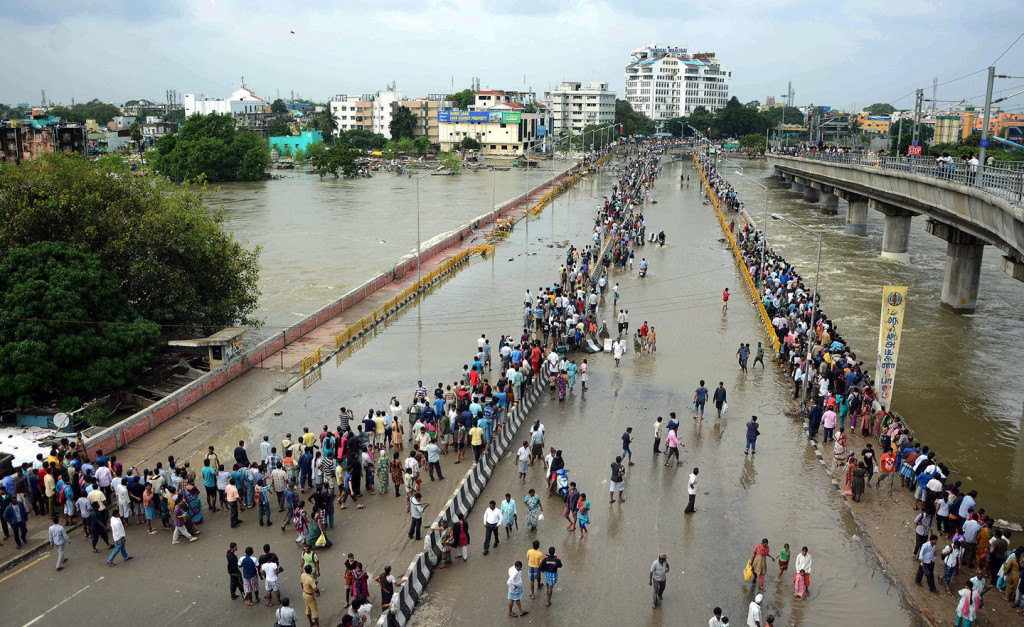
After a weekend of non-stop rain, the weather had cleared up enough to be able to go to the office. On the morning of the 17th, I went by car down my usual route, which takes me over the Adyar river. I could see it had broken its banks and inundated the low lying areas. People were standing on the roof terraces just looking down in disbelief at the river that their homes now stood in. Thankfully it didn’t last for too long and by the end of the week we were all up and running again.
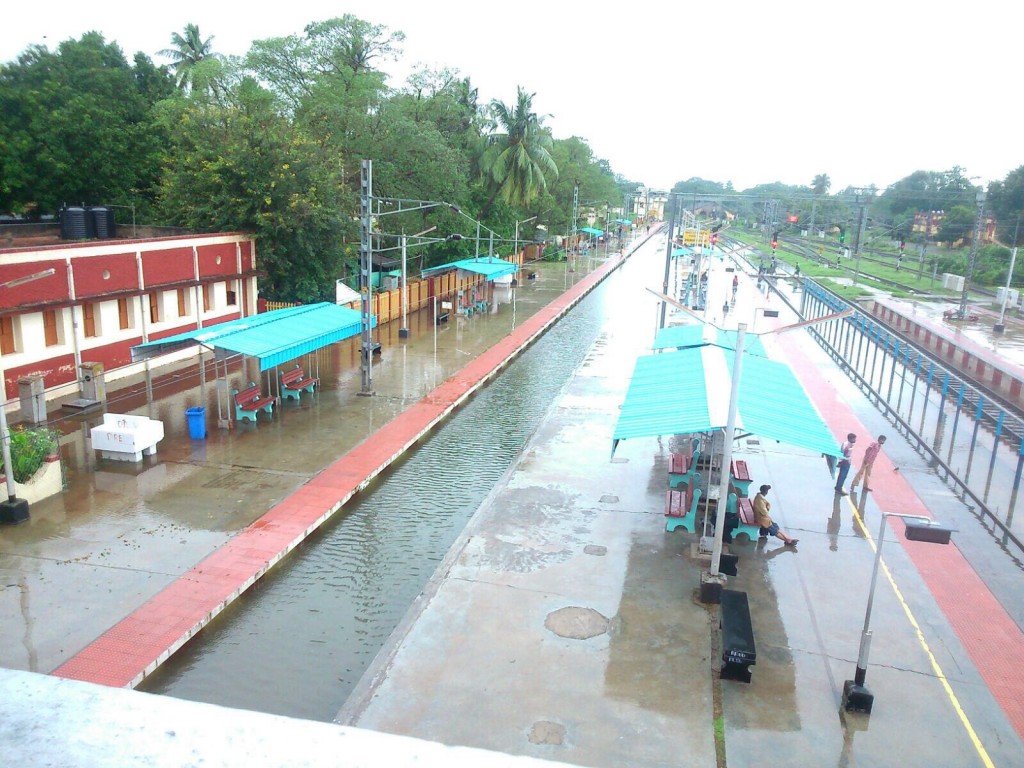
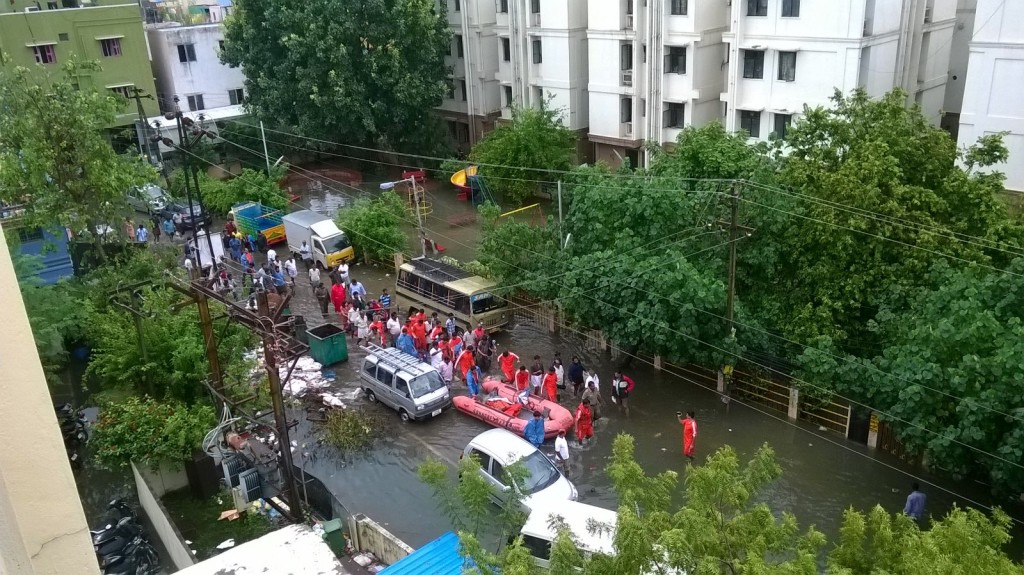
November 23rd – That’s a Lot of Rain
The last week of November was as bad as we thought it could get. It began innocuously enough with overcast skies on the 23rd November, but no rain. There had been light showers all weekend but we were still all able to make it to the office. Around 2pm it started drizzling again but forecasts, all forecasts, didn’t predict much rain. We knew it was going to be tough to get home but none could have foreseen the scenario that was about to follow.
We had hoped that the rain would clear up. These showers are common during the NEM and last for an hour or two at the most. By 6pm we realized that we needed to get home, raining or not. For some of us, it meant catching the train along the elevated tracks, for others it was a 90 minute bus ride even in good conditions, or a car ride home.
I personally take the train in the evening. There’s no quicker way to get around the city and the amount of people that spill out of the IT parks means you can be sitting in traffic for ages. At the Mandavelli station where I get off, I normally take an Uber cab back home, but the non-stop rain meant that most drivers were staying off the roads. If their car gets damaged, they have to pay for it out of their own pockets, so why would they risk 10,000 rupees of damage for a ride that will net a few hundred rupees?
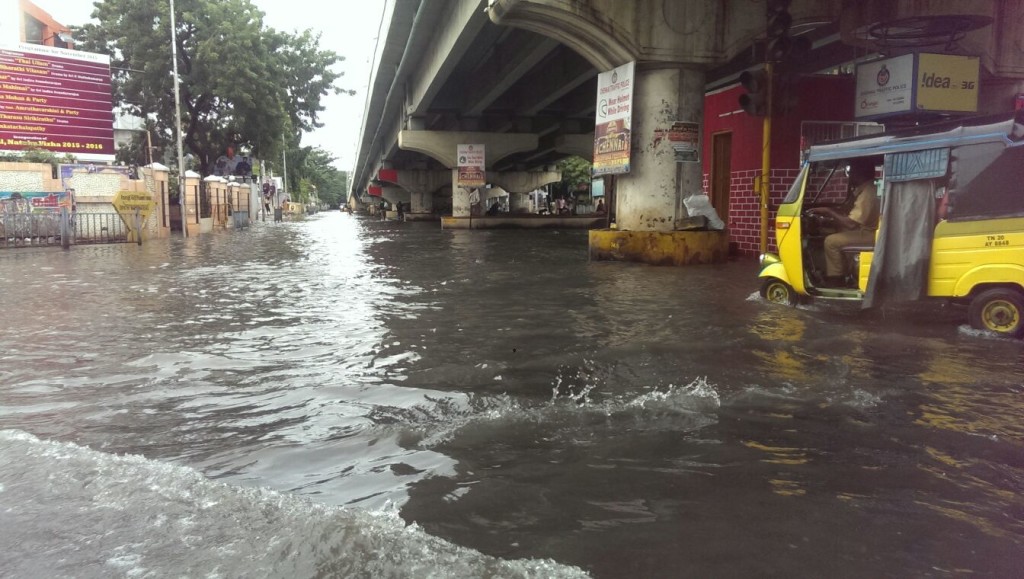
I flagged down an auto and he asked for 200 rupees to get to Nungambakkam – twice what I would pay for an air conditioned Uber taxi. It had been raining since 2pm and only getting heavier, so I knew the roads were likely to be flooded. What I didn’t know was just how flooded the roads were. Water covered even the main arterial roads. The side streets were even worse with six inches of water flowing through them. Social media was buzzing with people complaining about the rains. It was only 7pm but the entire city from North to South had come to a standstill. Junctions were gridlocked. Everything was stuck, even ambulances couldn’t get through. The city ground to a halt. There was nowhere for cars to go.
There was nowhere for me to go.
Or was there?
Waiting for it to All Blow Over
Inspired by Simon Pegg in Shaun of the Dead, I realized the safest place to be was sat in a bar with a pint of beer, and hold tight until the whole thing blew over. I called up my wife and explained the situation, throwing in a few words like ‘hopeless’, ‘peril’ and ‘doomed’. Luckily, my wife is awesome and she agreed that the safest place for me at that moment was at a bar. Even more luckily, the auto was right outside a five star hotel, so I was able to hop out and send the driver on his merry way. Or at least he could have been on his merry way if the traffic was actually moving.
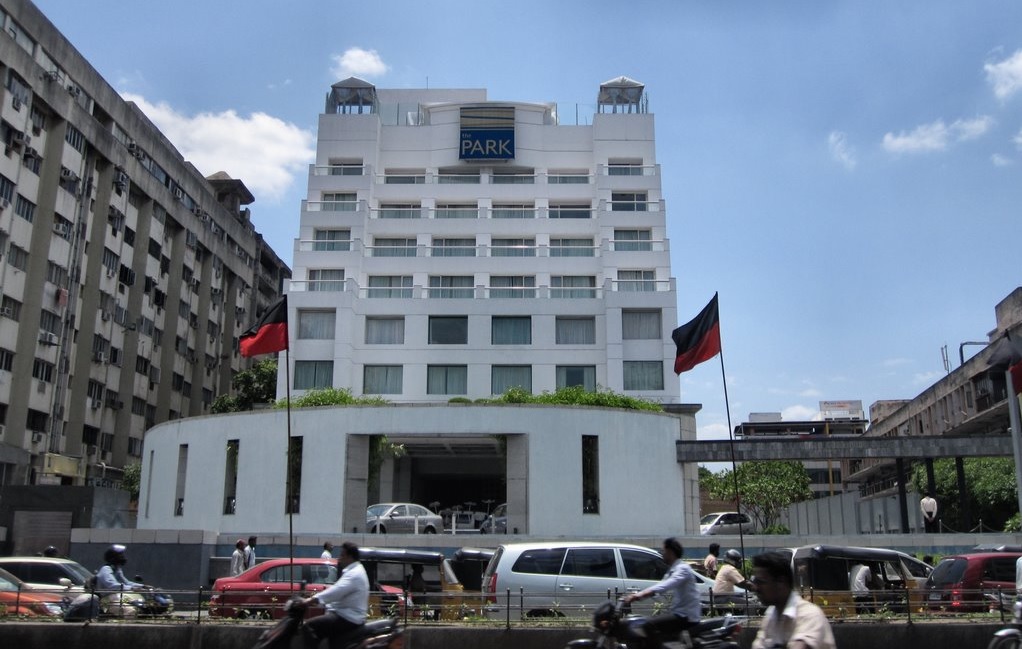
The bar itself was empty. Clearly no one else in Chennai had seen Shaun of the Dead or knew about this apocalypse survival technique. The whole plan had come together perfectly. The bar had beer on tap, burgers on the menu and football on the big screen TV. I texted my wife to let her know that I was safe from peril.
I then set about Whatsapping all my colleagues who were trapped inside their vehicles around various parts of the city. I let them know that I had found a safe place at the bar and that they should come and join me. Surprisingly they weren’t too happy that I was sending them photos of my safe house.
bar was so empty that the bar manager rounded up all his staff, and they set about learning how to make new cocktails. Now I don’t want to insinuate that all these drinks were for me, but there was no other customer in the bar. Just sayin’.
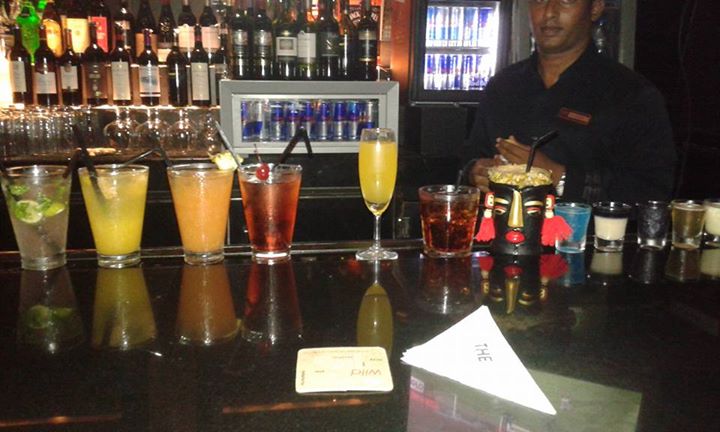
Unfortunately, many of my colleagues, and indeed tens of thousands of other people in the city, had it far worse than me. Some were still in their car four hours after leaving the office. Some didn’t even make it home and had to stay with friends. Information was being shared on social media about the condition of roads, it felt like the city was coming together to get the working population home.
The rain didn’t stop.
For days the rain came. We were all marooned in our little castles in the sky. It was kinda fun. We were all checking up on one another and getting on with our work from home. Our internet was out and we were surviving on tethered 3G connections. Thankfully the power remained with only a few intermittent cuts. Tuesday rolled into Wednesday before the rain finally fizzled out and we could return to the office again.
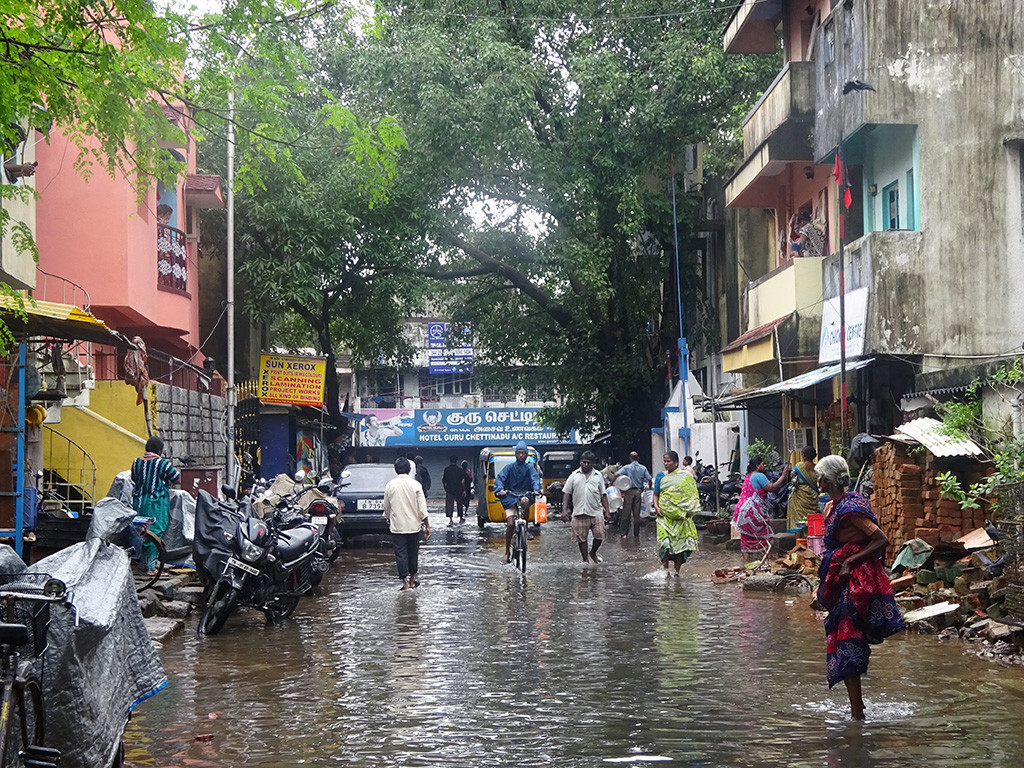
For the remainder of the week there was the odd shower but we believed that things were getting back to normal. We even went out bar hopping on the Friday! There were murmurings on the weather sites of heavy rains that would hit over the weekend and plans to see Spectre at the new IMAX were cancelled. Of course, when heavy rains are predicted, the NEM tends to do the exact opposite and it was clear skies all weekend.
30th November – Run, You Fools
The 30th November started like the Monday before. Bright but overcast. People were complaining that they had cancelled so many plans because of the reports of the crazy rains which never materialized. At 3pm, the drizzles started again. Fresh from the horror commute (or in my case, being stuck in a bar for three hours) of the previous week, we fled from the office like rats fleeing a sinking ship.
It was a good call, too. The rains got heavier and heavier and once again, the entire city was pounded throughout the night. Areas that were flooded from the previous week still hadn’t recovered. In the south of the city, the groundwater was so high that the water had no way to percolate into the soil.
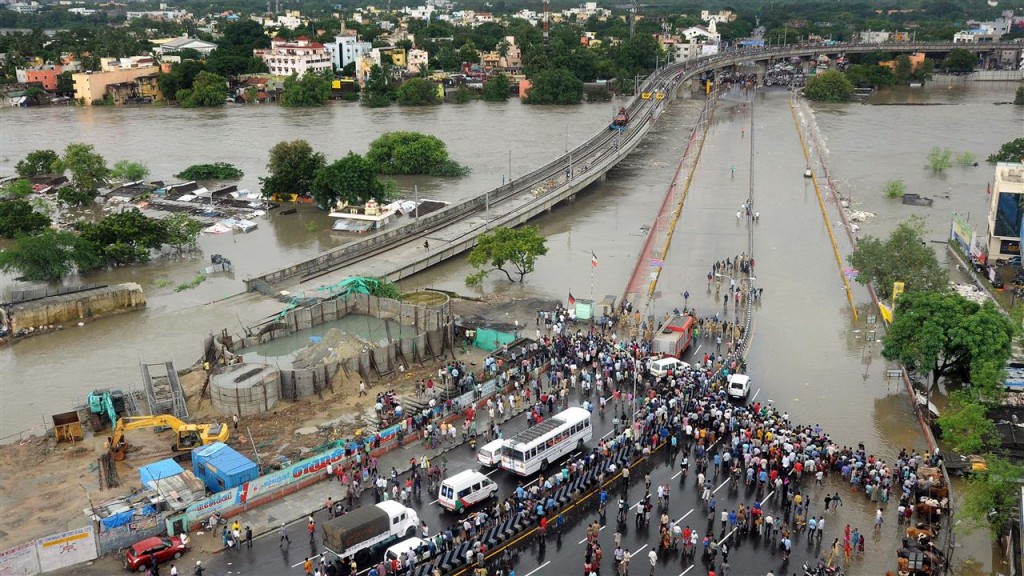
It was the south of the city that took the brunt of the deluge as well. Overnight, the lakes that surround the city, already full from the past month of rain, burst through dams and dykes, completely flooding entire neighbourhoods. Many areas of southern Chennai are built over lakes that had been filled in. With the water having nowhere else to flow, it gathered and spread amongst the low lying neighbourhoods. The storm water drains were rendered ineffective because they drained into the Adyar and Cooum rivers, and Buckingham canal, all of which were flooded. The water literally had nowhere to go.
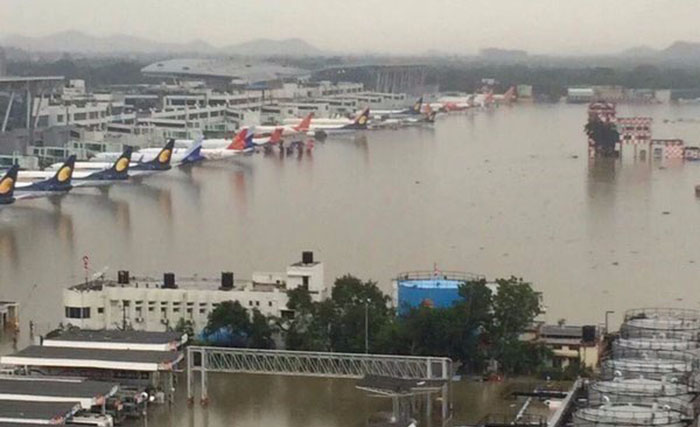
The rain didn’t stop.
As Tuesday morning broke, there was no let up in the rain. For hours it came down. Sometimes hard, sometimes light, but never stopping. As the severity of the floods became clear, the conversation between everyone turned from light hearted to more serious. Suddenly there were friends or relatives that were trapped in their apartments. Over the course of the day, the power to various neighbourhoods either failed or was switched off as a safety precaution – fallen power lines electrocute far too many people in India. The southern part of the city spent most of Tuesday without power.
Chennai Begins to Sink
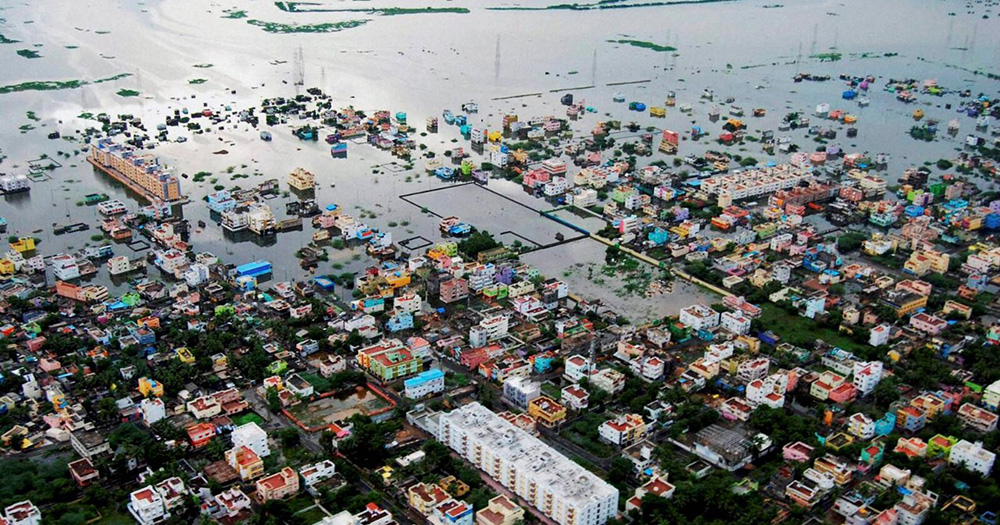
There was worse to come. Even more water needed to be released from the reservoirs – more than had been released the previous week. Had they not released the water, I’m sure the potential destruction would have been even greater. With lakes and rivers already overflowing, Chennai’s fate was truly sealed. Areas that had never experienced flooding before were suddenly under water. In the houses and apartments bordering the lakes and rivers, the ground floors were once again submerged, but this time even first floor apartments were in danger. Some were even stranded on the terrace roof of their homes.
The rain didn’t stop.
By Tuesday evening, Nungambakkam had miraculously had power for the whole day – I even took conference calls with my boss in New York. “It’s bad, but we’re fine.” I had told him. We even had broadband at that point. A few people from the southern part of the city were posting on Facebook that they were marooned in their homes, apartments were flooded, power had been out and even the mobile networks were beginning to fail. It was disturbing but it seemed localized. The Government rescue teams would help them. As the rains finally eased off we went to sleep.
1st December – The Citizen Rescue Force is Mobilized
On Wednesday it was becoming clear how much the city had suffered over the last couple of days. What had been a few requests for assistance the day before, turned into a never ending stream of desperate cries for help. Snakes from nearby waterbodies invaded homes and were forcing people to seek shelter in stairwells, elderly people were running low on essential medicine or oxygen, pregnant ladies were going into labour, hundreds of orphans were stranded without food and drinking water, students in hostels were without power or any means to reach the outside world, hospitals were running out of food to feed their patients. Entire neighbourhoods were cut off. The only way to reach them was by boat – not something that is available or readily transportable through the flooded city streets.
Aghast, we watched the thousands of desperate pleas for help fill our Facebook and Twitter feeds. A feeling of hopelessness came over us. There was nothing we could do but read the ever more frantic rescue requests. But by mid-morning the power finally spluttered and died in our area. A couple of hours later, the mobile networks shut down.
We were going dark.
However, compared to hundreds of thousands of people in the city, we were the lucky ones. We had already stocked up on food in the morning and pre-cooked all our meals along with ensuring we had plenty of drinking water.
Wednesday was a tragic day for a city that was beaten black and blue over the last month. It was also a truly inspiring day for its citizens. While the Government rescue teams used boats and helicopters to rescue people from the worst affected areas, the people of the city mobilized themselves as an unofficial, unsanctioned civilian rescue force. There were tens, if not hundreds of thousands of people that had spent all of Tuesday without power. Food and drinkable water were running low and flood waters were still rising. Although they weren’t in immediate danger, you can only imagine the terrible hardships they were going through. A mother unable to give her daughter a drink of water, a father unable to find out if his son is OK.
With the prospect of these people being stranded for a second day and with the likely scenario of people running out of food and drinking water, the citizens of Chennai swung into action.
Chennai’s Citizens Rescue Themselves
Armed with social media, Whatsapp and Google Docs, thousands of people organized relief efforts across the city. Those that had access to boats or all terrain SUVs made sure people knew how to contact them, online spreadsheets were set up where hundreds of people opened up their homes to any and all that needed it. Many people cooked everything they had and went out on foot, on bikes and in cars to distribute food and water to any one that needed it. People from other countries that had families and friends living in Chennai sought news about their loved ones, and through the social fabric that weaves the people of India together, news and updates were given. Strangers were topping up pre-paid phones of any one that had run out of balance. Some were offering to pay for all medical expenses of any woman that went into labour during this crisis – regardless of the hospital. Others let people know that if they needed money (all the ATMs had shut down), they could help out. Whatever help could be offered, was.
Back in my own country, people talk about the spirit of the Londoners during the Blitz. In the face of so much unimaginable adversity, everyone pulled together and looked out for everyone else. It’s an incredible story of humanity and cooperation. However, it would be narrow-minded and even arrogant to assume that this spirit is limited only to the British. I believe it’s a spirit that is possessed by every human, the desire to do something, to make a difference, to help in any way.
About a week ago my wife posted a very poignant blog post asking: Where is the love? The Paris attacks had just happened, there was another massacre in the US, the Middle East is just a quagmire of misery, refugees fleeing Syria are clinging to life by the smallest of threads – it’s a fair question. Where is the love?
Well, I found it.
It’s right here in Chennai. In every one of its citizens that went out to do something. Made a difference. Helped in even the smallest of ways.
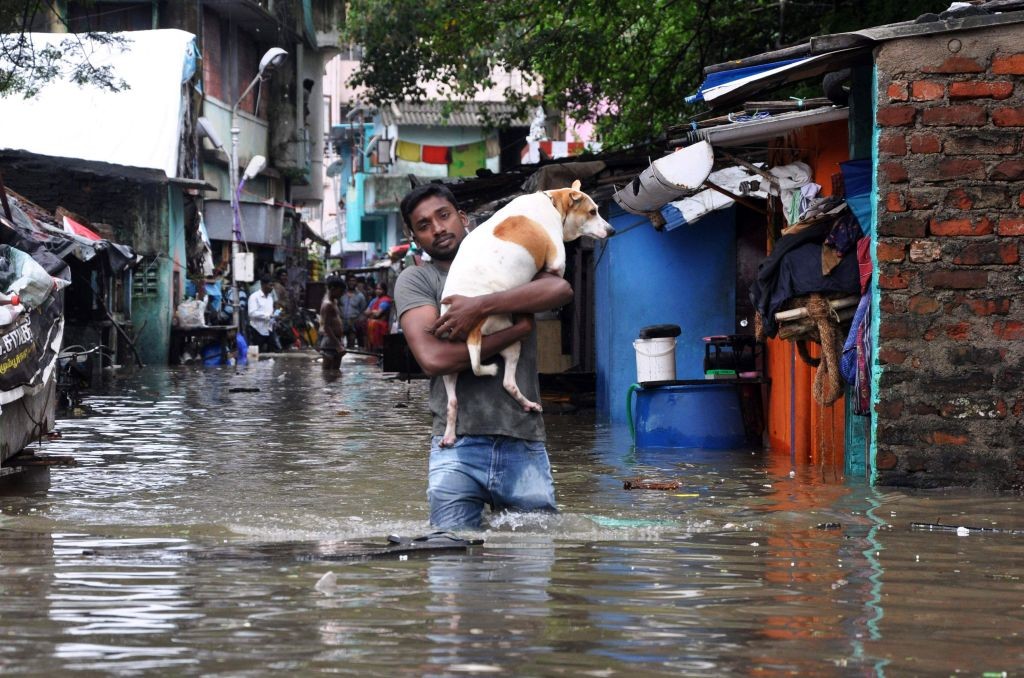
The ones that opened their homes to those from all walks of life. The ones that shared critical information. The ones that checked on strangers after seeing a request on Facebook. The ones that donated to the relief efforts. The ones that waded through water to distribute food and supplies. The ones that brought the street dogs into their homes. The ones that set up websites, Facebook groups, Whatsapp groups, spreadsheets and maps to help disseminate vital information. The businesses that opened their doors to help people. The ones that were there providing company to those that needed it.
Rescued 3 dogs due to #chennairains at Guduvanchery. Please don’t forget them! #SaveAnimalsInNeed cc: @BlueCross_ pic.twitter.com/BWScm0t6nr
— Vinay (@iVinay) December 1, 2015
@sampath_karthik @splatha0825 @mylittlethought @mithelesh @rawatpankaj Unkown ppl formed a team, recharged 1000+nos in 3 days #chennairains
— Ashwin ram (@Ashwinram14) December 3, 2015
Phoenix Marketcity’s doors are open for anyone who seeks shelter in this difficult time. #ChennaiRainsHelp #ChennaiRains #PrayForChennai
— Phoenix Marketcity (@pmcchennai) December 1, 2015
There’s a lot of love left in this world. In the face of adversity, is when humanity can shine its brightest. Let’s not forget it.
Get well soon, Chennai.
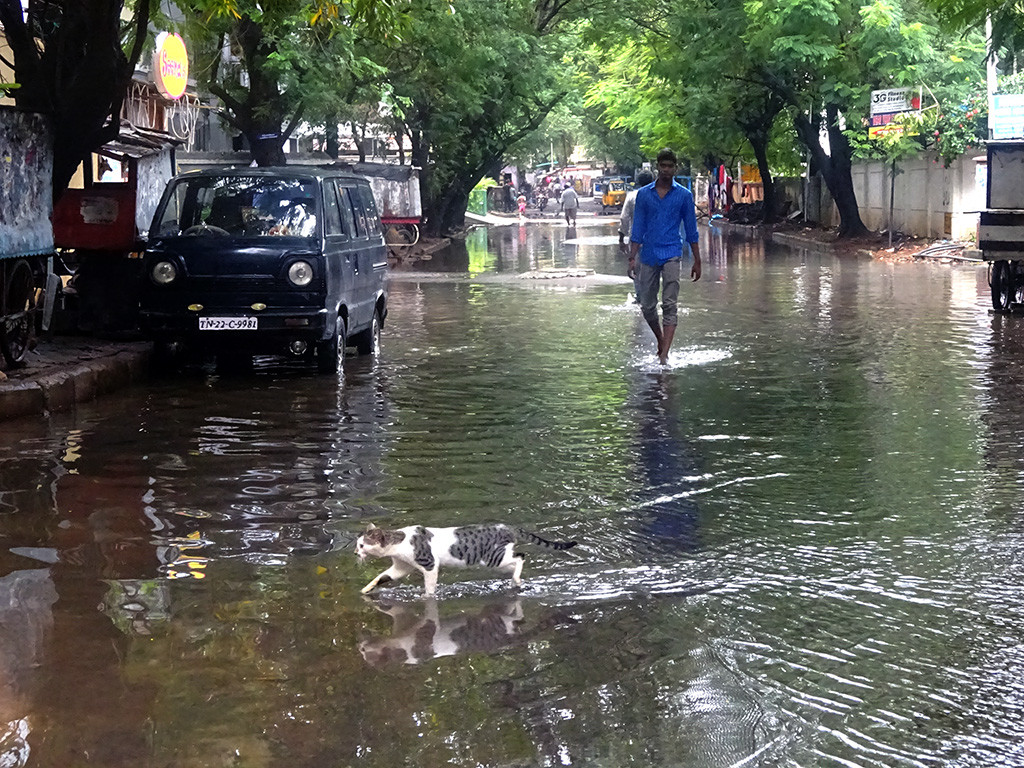
Note: Photos gathered from around the Internet or shamelessly stolen from my friends that shared their photos on Whatsapp. Some were even taken by me.